
Sintesi: Early 2026 Update
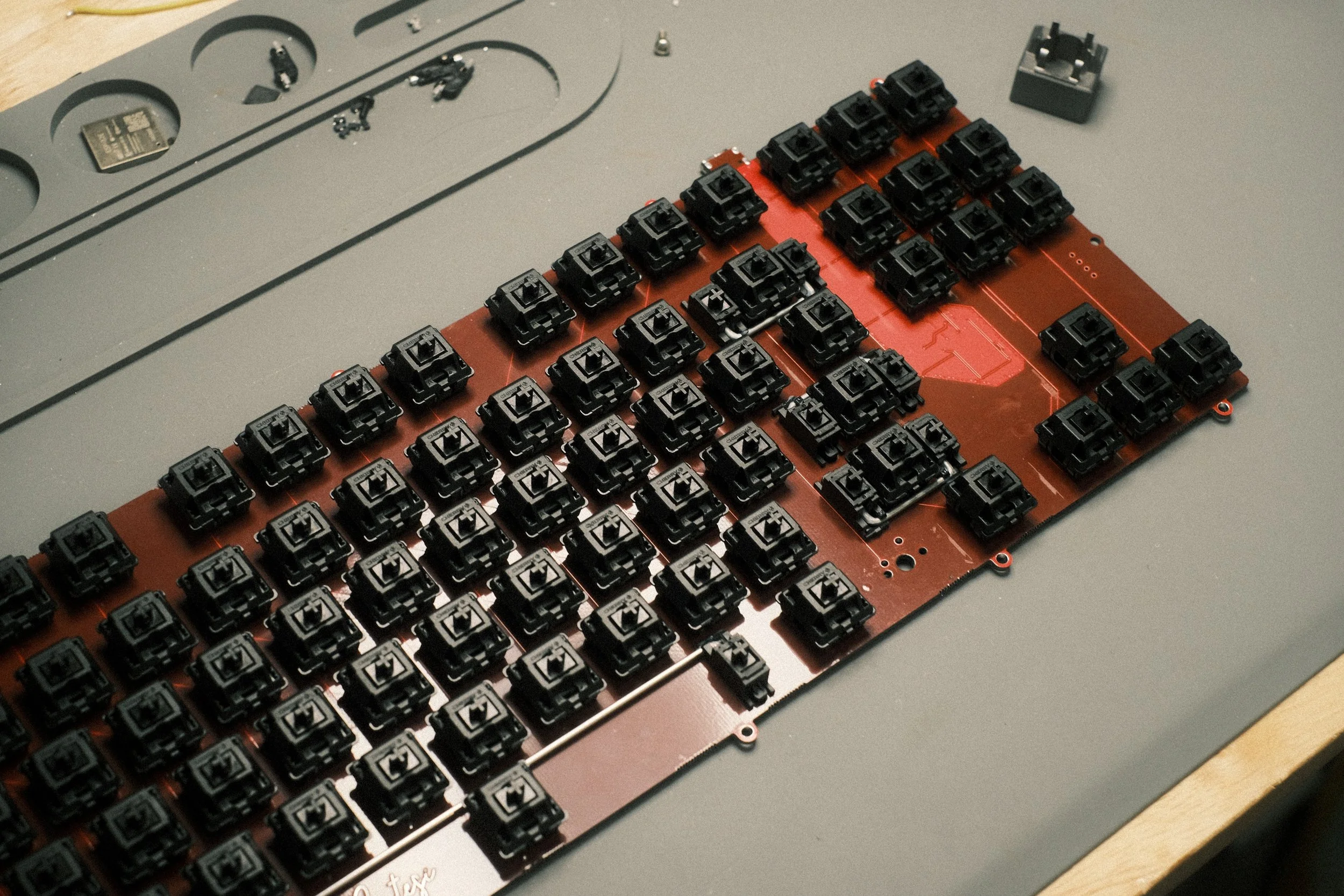
I have a special fondness for PCB-mounting boards, stemming from early experiences with vintage Cherry boards, then to the much underrated Jer80 & Jer80S custom TKLs. It’s simple to assemble and maintain, as you can tune the switches and stabs without having to take the whole build apart. More importantly, it provides a soft and pleasant typing experience (in my opinion), with a deep and full sounding profile that is unique to this configuration.
We worked on something called the Session 1 more than 5 years ago, but it never came further past the prototyping stage. I simply thought our design choices weren’t good enough, and also as a team, Mechlovin’ didn’t have the maturity to manage such a potentially risky endeavour (you know what happened to a lot of group buys during that time). After and above all, I’m a seasoned hobbyist who has a specific acquired taste and “survived” numerous group buys over the years, so if I’m to offer a keyboard to the public, it will have to be one that I’m completely happy with, in terms of both design and our fulfillment capacity.
I definitely feel that way with the Sintesi, which we and Merisi have been working on for a while. You’ll find a familiar design language that has made Merisi “kustom” series so successful over the years, with touches of unique elements under the hood. The mounting mechanism is, of course, direct top PCB-mount with all of its aforementioned benefits and possible downsides (more on this later). The switch spacing is non-standard, and adjusted to the tighter measurements used in vintage OTD keyboards. We spent a few years working on OTD replacement parts with varying degree of success, and so this design choice is more of a homage than anything practical or noticeable, though subjectively for me, boards with tighter spacing do give a subtly different look and feel.
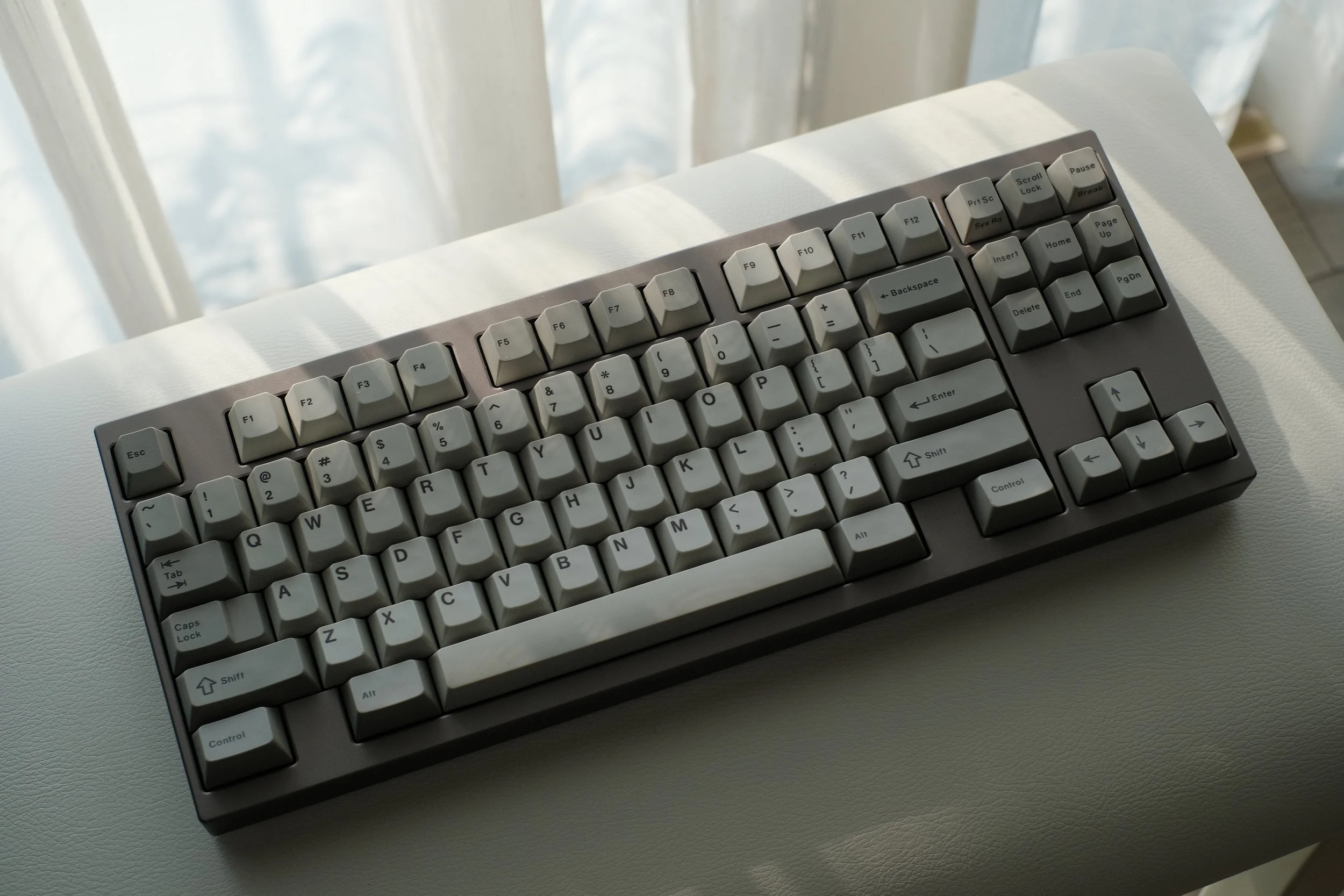
Sintesi Prototype #1 with NCR 3077SAU dyesub keycaps
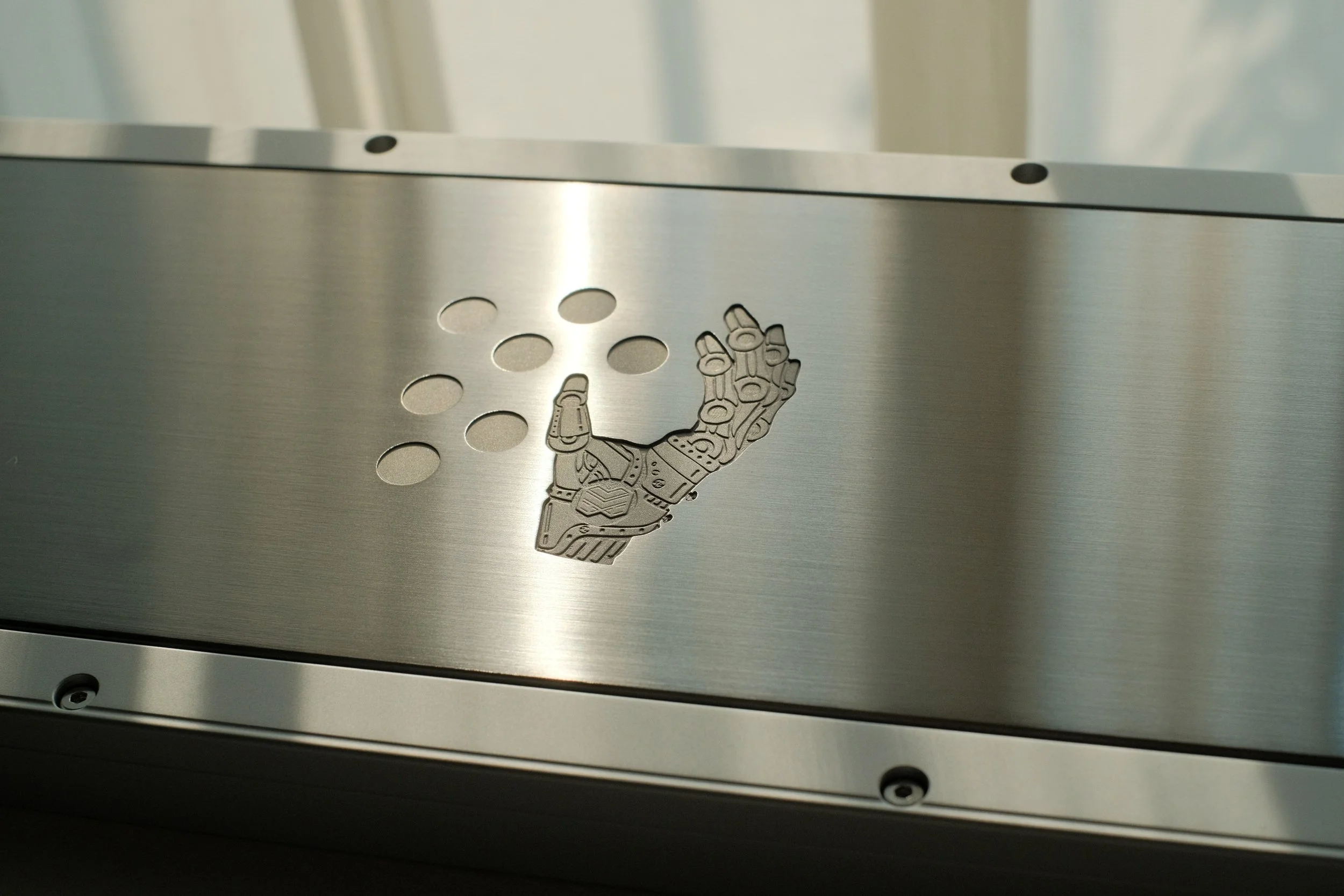
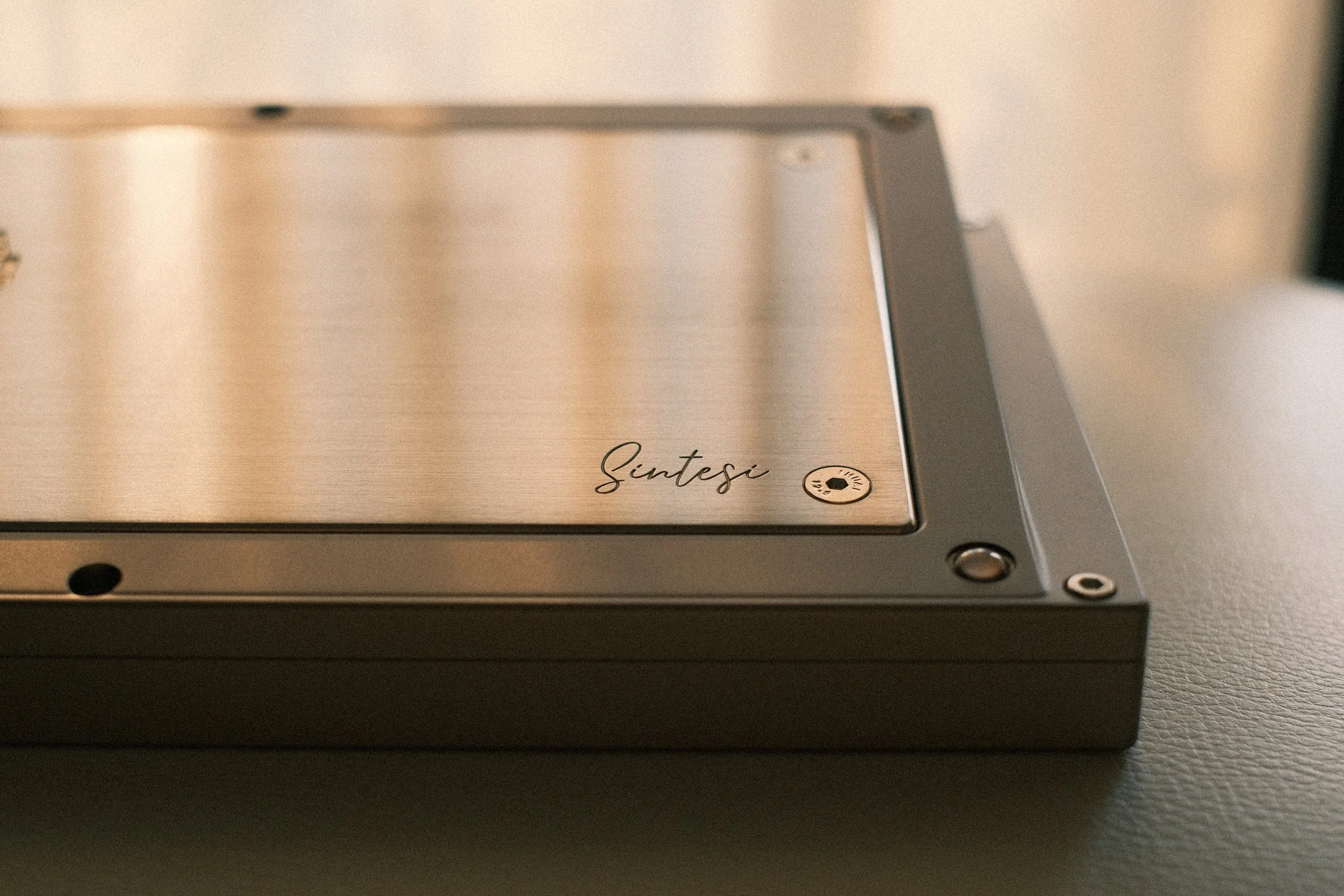
The engraving on the Merisi-signature brushed stainless steel backplate is certainly the most striking design element, and in many ways, a direct expression of the name Sintesi itself. It’s a “synthesis” of the Caravaggio-inspired Merisi logo and the mechanical elements inherent in Mechlovin’s body of work. If you want a deeper interpretation, I’d say that the engraving plays on the dynamics between machine and nature: a mech-hand reaching for grapes somewhat represents artificial intelligence’s imperative to operate on an organic level. It’s surely not meant to be social commentary though, I won’t pretend it goes as far as that, but the symbolism is intended for those who care to see it.
We have made good progress on prototyping, and the case design is now close to be, if not already, final. We’re also experimenting different PCB configurations, but will not overcomplicate things just for the sake of it. A 1.2mm PCB on this mounting mechanism was tested years ago and the typing feel was way too wobbly, so 1.6mm is the only thickness available. Apart from the standard ANSI PCB, a fixed ISO-layout PCB prototype is already made and tested, and an ALPS kit is also on the works. Offering these unpopular options doesn’t make sense financially, but we see values in catering to the minority, and it seems like a perfect excuse for me to finally put my ISO and ALPS stuff to good use.

In terms of availability, I’d prefer to do an in-stock sale, but realistically speaking, there may be a pre-order with quick turnaround (when production is already near completion). The main reason for this is that while the number of boards will be fixed, it’s hard to gauge the the needs for extra PCBs and possibly other parts, so it’ll be nice to have a bit of buffer. Considering how things are going, I hope that full production can start some time in Q2 2026, followed by a sale and fulfillment period in Q3. An accompanying artisan keycap design is also currently in the works.
There is no such thing as the perfect keyboard. The PCB-mount typing experience may not be for everyone, and for every advantage it offers regarding assembly and maintenance, there are corresponding trade-offs. For example, you may need to put in a bit more care when lining up the switches before soldering (especially used ones that have worn-out pins due to prior installation), and crude keycap pulling attempts can pop the switch-top off (due to the lack of a switch plate to keep it in place). Also, due to the plateless configuration, there won’t be hotswap capability for the PCB, and while there are workarounds, that seems beside the point to me. Sintesi is the product of a specific set of preferences, and if they resonate with you, I think you’ll appreciate what it offers. If they don’t, that’s perfectly fine too. It’s just a keyboard after all.
